Blog
5 Ways Better Packaging Keeps Snacks Fresher for Longer
You open a bag of chips that's been sitting in the pantry for a week, and instead of that satisfying crunch, you get something closer to cardboard. The chips aren't spoiled. Nothing dangerous happened. What actually happened is a lot more interesting than "the bag got old," and it comes down to some fairly precise food science happening at the surface of every chip, cracker and nut in your kitchen.
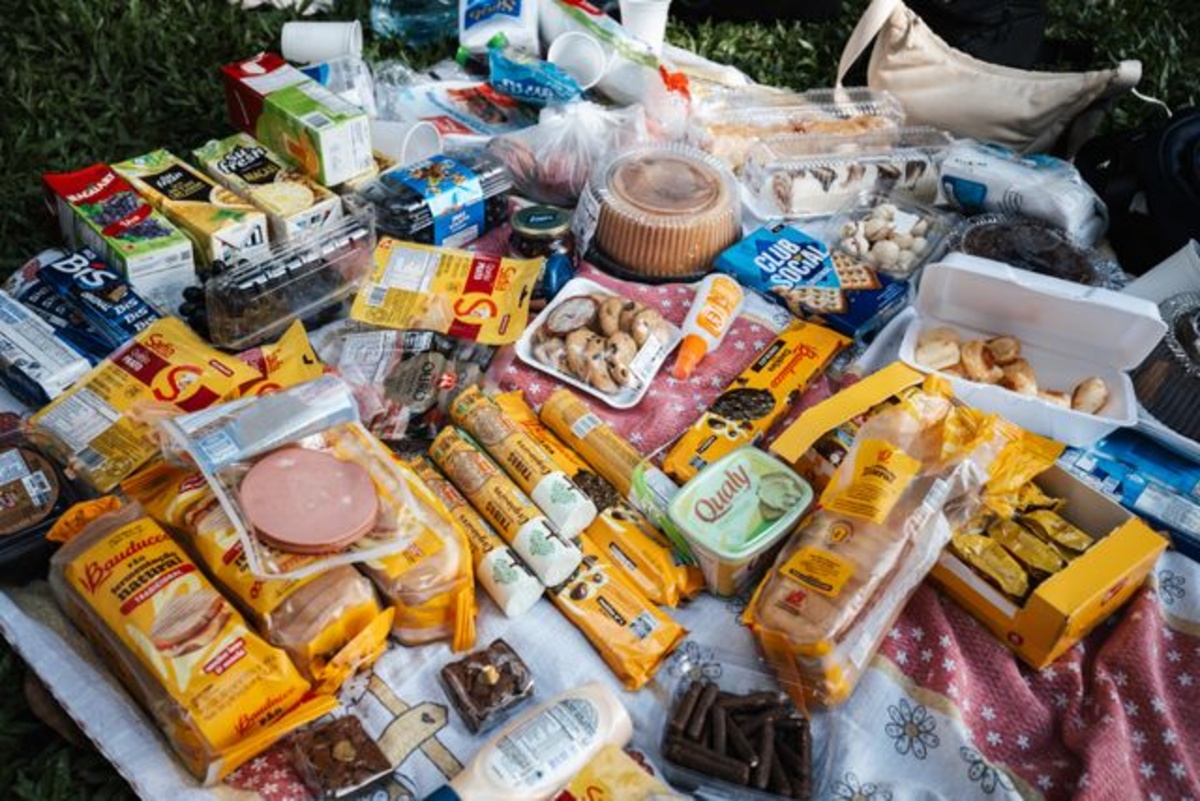
Photo by Matheus Bertelli
1. Humidity Is the Real Enemy of Crunch
Crunch isn't really about the chip itself, it's about how much water is inside it. Low-moisture snacks like chips, crackers and popcorn are dried down to a very specific internal moisture level during manufacturing, and that low moisture is what gives them their crisp texture in the first place.
The problem is that dry food doesn't like staying dry when it's surrounded by humid air. Food scientists describe this using a measurement called water activity (often written as Aw), which reflects how much of the water in a food is actually available to move, rather than just the total moisture percentage. Crispy snacks typically need to stay below a fairly low water activity threshold, food scientists have long identified a "critical water activity" zone, often cited in the range of roughly 0.35 to 0.5 Aw depending on the specific product, above which starchy snacks lose their crispness and begin to feel soft or leathery.
Here's the part most people don't realize: this softening isn't spoilage. It's a physical change called moisture migration, where water vapor moves from the more humid surrounding air into the drier food, following basic physics, water activity naturally equalizes between a food and its environment unless something is blocking that movement. A chip can become noticeably softer while still being completely safe to eat, which is exactly why a stale-feeling snack doesn't necessarily mean it's gone bad.
2. Why a Thicker Bag Isn't Automatically a Better Bag
It's tempting to assume that a heavier, thicker package must protect food better. In flexible packaging, that's not really how it works.
The relevant measurement is something called Water Vapor Transmission Rate, or WVTR, which describes how much moisture actually passes through a given area of film over time under specific conditions. WVTR depends far more on the type of material and how the film is constructed, whether it has multiple layers, specific barrier coatings, or a metallized layer, than on raw thickness alone. A thin film engineered specifically as a moisture barrier can outperform a thicker film that wasn't designed with that job in mind.
This is why snack packaging is rarely just "plastic." Manufacturers often build multilayer structures, or add specific coatings, precisely to hit a WVTR target that suits how sensitive a particular snack is to moisture. A cracker with a very low target water activity generally needs a stronger moisture barrier than, say, a nut mix with a slightly higher tolerance, and packaging engineers choose materials with that specific difference in mind, not a one-size-fits-all film.
3. What Happens the Moment You Open the Bag
Every bag has two different seals doing two different jobs. The original heat seal, the one you tear open, is designed to be essentially airtight until the moment of first use. The zipper reseal that many bags include afterward is a separate, mechanical seal, and it's not automatically going to perform the same way.
Once a bag is opened, the clock resets in a sense. Each time the bag is left open, or resealed imperfectly, humid kitchen air gets a fresh chance to interact with the remaining snacks inside, restarting the same moisture migration process described above. A zipper that seals cleanly and consistently can meaningfully slow this process compared to a bag that's simply folded over or clipped, because a well-designed barrier zipper is engineered to limit air exchange in a way that a loose fold cannot.
This is one reason the packaging format itself matters as much as the material. The required barrier and closure can vary considerably depending on the specific food, which is part of why commercial snack and jerky packaging is typically designed around factors like a product's moisture sensitivity, fat content and how a consumer is likely to reopen and reclose it after that first use, rather than using a single generic bag design across very different snack types.
4. Oxygen Is a Completely Different Problem From Moisture
Moisture ruins texture. Oxygen ruins flavor, and it's an entirely separate mechanism worth understanding on its own.
Fatty snacks, potato chips, tortilla chips, nuts, contain oils that react with oxygen over time through a chemical process called lipid oxidation. This is the same basic chemistry behind why cooking oil left open on a counter eventually smells "off." In packaged snacks, that oxidation shows up as rancid or stale flavors long before the texture changes from humidity would ever become noticeable.
Because oxygen and moisture are separate threats, packaging engineers often address them with separate strategies. Materials with strong oxygen-barrier properties, sometimes involving specific film layers or coatings, are used to slow oxygen from reaching the product in the first place. It's also common for oil-rich snacks to be packaged using nitrogen flushing, where much of the oxygen inside the bag is displaced with inert nitrogen gas before sealing, specifically to reduce the amount of oxygen available to react with the fats inside. That's also part of why a freshly opened bag of chips is often puffed up rather than flat, that's the nitrogen, not just air.
5. Why "Shelf Life" Isn't One Fixed Number
It's tempting to want a single, universal answer: how long does a bag of chips actually stay fresh? The honest answer is that shelf life is the outcome of several variables working together, packaging material, storage temperature, humidity conditions and the food's own formulation, so it isn't a fixed property of the snack alone.
Food science storage studies generally test how quality attributes, crispness, oxidation markers, flavor, change over time under specific, controlled temperature and humidity conditions, which is a very different thing from a universal shelf-life guarantee. A snack stored in a hot, humid kitchen will lose quality faster than the identical product stored in a cool, dry pantry, even with identical packaging. Manufacturers typically set shelf-life dates based on how a product performs under reasonably realistic, but still specific, storage assumptions, not under every possible condition a bag might actually encounter in someone's home.
That's part of why the same snack can taste noticeably fresher from one bag versus another, even from the same brand, depending on how it was stored, how long the bag sat open, and even which part of a shipment or shelf it came from.
The Bag Is Doing More Than You Think
None of this means every snack bag is engineered to the same standard, or that packaging alone determines freshness. Formulation, ingredients and storage habits all matter too. But the next time a bag of crackers goes soft a few days after opening, or a bag of nuts tastes slightly "off" toward the end of the box, it's worth remembering that a fairly specific, well-understood set of physical and chemical processes, moisture migration, oxidation, and how well a seal or zipper actually closes, is quietly at work behind that change. The packaging isn't just holding the food. It's actively working against the physics and chemistry constantly trying to change it.
Photo Gallery


Comments