Blog
How to Create a Cozy Coffee and Tea Corner for Family Life
The kettle clicks on before the house is fully awake. Someone reaches for two mugs in the half-light of the kitchen. Later, cocoa might be stirred for a child still wearing a backpack from the bus stop, or tea might be poured after dinner, once the counters are clear and the day has finally softened.
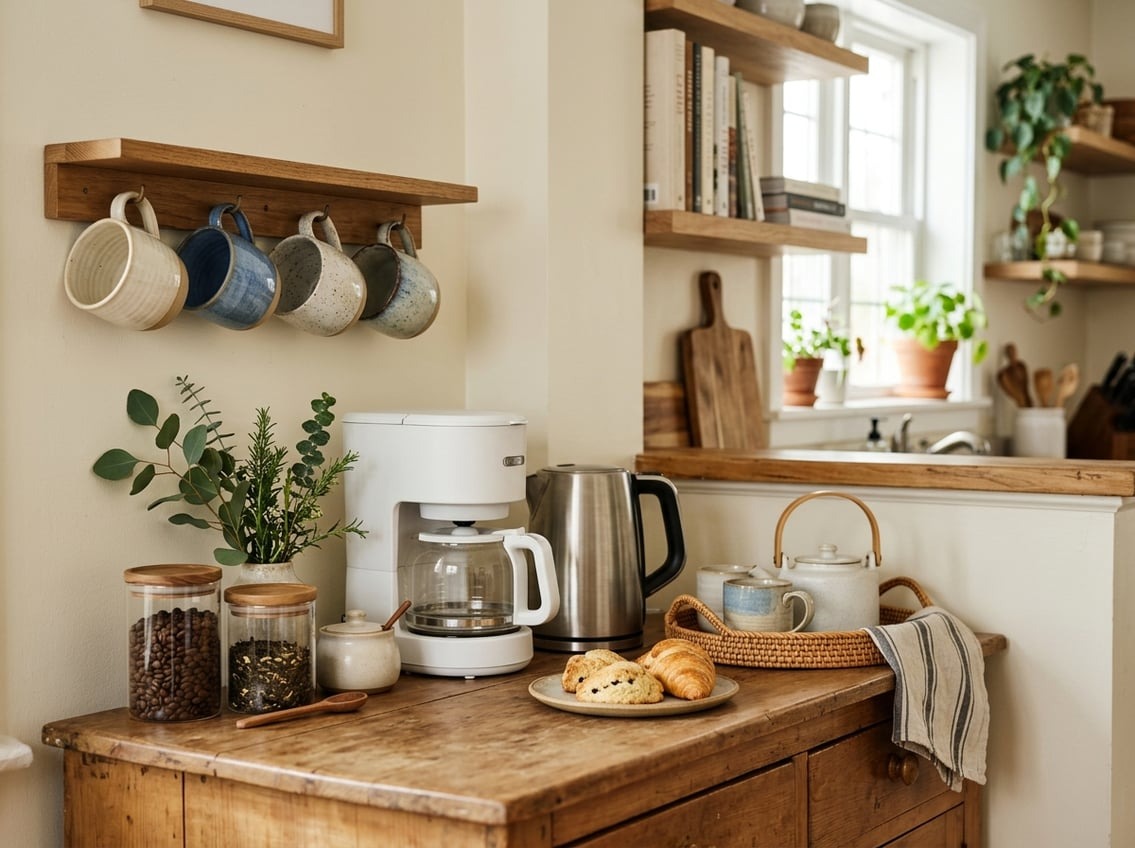
A cozy coffee and tea corner is not about turning the kitchen into a café. It is a small, practical place built around how a household already drinks coffee, tea, and cocoa. Done well, it saves cabinet searching, keeps everyday supplies within reach, and makes ordinary drinks feel a little more cared for.
Begin With the Moment, Not the Setup
Before choosing a shelf, tray, or basket, notice when the household actually reaches for a warm drink. A station built around real routines will work better than one arranged only to look pretty.
Morning coffee before the house gets busy
For many parents, the first cup of coffee happens in the few quiet minutes before everyone else is moving. Keeping a favorite mug near the coffee maker, with filters or pods stocked nearby, protects that small window from being lost to rummaging.
After-school cocoa or tea
Kids often arrive home hungry, restless, and full of the day. A basket of cocoa packets or mild tea within easy reach lets an older child help with their own drink, while a parent stays nearby for anything hot. That small pause can soften the shift from school day to home life.
A quiet evening cup once dinner is done
Once the kitchen has emptied out, herbal tea beside a jar of honey can make the last hour of the day feel less rushed. That moment does not need much. It just needs the tea to be easy to find.
Thinking this way, drink by drink and habit by habit, makes it easier to decide what the corner should hold and what can stay out of it.
Find a Spot the Family Will Actually Use
The best spot is usually the one the household already passes in the morning, not the one that photographs best. A section of counter, a single cabinet shelf, or a labeled pantry bin can all work if the supplies sit near water, mugs, the kettle, or the coffee maker.
Countertop tray
A simple tray beside the kettle can gather tea bags, a jar of coffee, and a few daily mugs without letting everything spread across the counter. Being able to lift the tray away for wiping matters more on busy mornings than any styling detail.
Cabinet shelf
A lower cabinet shelf works well for everyday mugs, especially if children are allowed to reach them. Keeping the family’s regular mugs separate from rarely used pieces means nobody has to dig through a crowded cupboard before 7 a.m.
Small pantry basket
A labeled bin for tea bags, cocoa packets, and sweeteners keeps things tidy without taking up counter space. This option suits kitchens where every inch of counter is already spoken for.
Whatever spot is chosen, it should make the drink easier to prepare. If someone has to cross the kitchen twice to make one cup, the setup probably needs to move closer to the action.
Stock What Gets Used, Then Stop
The corner stays useful only if it holds what the household drinks regularly. Too many syrups, extra tea boxes, and half-used seasonal mixes create the same clutter the setup was meant to solve.
Everyday essentials
Coffee, a few familiar tea bags, cocoa mix, sweeteners, spoons, and napkins cover most family routines. These items earn a permanent place because they are used often enough to justify being out and visible.
Small extras that make it feel special
A jar of cinnamon, a little honey, brown sugar, or vanilla syrup can make an ordinary cup feel more considered without adding much work. Marshmallows for cocoa or lemon slices for tea belong in the same category: small, inexpensive, and actually used.
What to store somewhere else
Backup coffee bags, extra tea boxes, and specialty blends saved for occasional guests belong in the pantry. Keeping only open or soon-to-be-used items in the corner prevents it from turning into another storage cabinet.
A seasonal item can be added for a while, then retired once the moment has passed. Holiday cocoa is pleasant in December. It does not need to claim counter space in March.
Let the Drink Decide the Cup
The right mug depends on the drink and the moment, not on matching a full set. A sturdy everyday coffee mug earns its place through use. A smaller cup may suit an afternoon espresso-style drink, while a larger mug makes cocoa feel like its own little event.
A mug for the morning rush
A weekday mug should have a comfortable handle, a stable base, and no fussy care instructions. It should be easy to wash and familiar enough that reaching for it barely feels like a choice.
A cup for slow tea
A smaller cup can make an evening tea feel more deliberate. It does not need to be delicate or expensive. It just needs to be pleasant to hold for a few quiet minutes.
A few guest-ready pieces
Two or three nicer mugs or simple matching cups are enough for weekend brunch or a visiting friend. There is no need for a full second set if only a few pieces will actually be used.
If the cupboard could use a small refresh, a thoughtful mix of coffee cups and mugs can cover the daily rotation without overcrowding the shelf: coffee in the morning, tea after dinner, cocoa for the kids, and something a little nicer when guests stop by.
The cup will not change the coffee itself, but it can change how the moment feels. Sometimes that is the whole point.
Make It Easy for Guests and Weekend Mornings
This little drink area becomes especially useful when someone outside the usual routine walks into the kitchen. Grandparents may want tea. A friend may stop by after school pickup. Weekend brunch might stretch longer than planned.
Keep the choices simple
Guests do not need a full menu. A few clear options are enough: regular coffee, one caffeine-free tea, one black or green tea, and cocoa if children are around. Simple choices feel welcoming without making the host step away from the conversation.
Keep cups easy to see
Guest-ready mugs should be easy to find, not tucked behind seasonal dishes or special-occasion glassware. Placing two or three on the same shelf as the everyday mugs keeps the setup relaxed and useful.
Make refills natural
If tea bags, spoons, napkins, and sweeteners are grouped together, guests can help themselves without asking where everything lives. That small bit of independence keeps hosting casual, which fits the spirit of everyday family meals.
A thoughtful corner does not need to impress anyone. It simply helps people feel at home.
Add Warmth Without Adding Work
Cozy does not require a bigger budget or more decoration. A few useful details, like a clean tray, a favorite spoon, or soft napkins, can make the space pleasant without turning it into something that needs constant attention.
Use texture and warmth
A cloth-lined basket for tea bags or a folded towel kept nearby for spills adds softness while still serving a purpose. These details work because they are used, not because they fill space.
Add one seasonal detail
A holiday cocoa jar in winter or a small vase of flowers in spring is enough to make the corner feel current. One seasonal touch is charming. Too many can make the area feel crowded.
Keep cleanup simple
A tray that lifts away for wiping, mugs that go straight into the dishwasher, and a basket that can be restocked quickly all help the setup last. If resetting the corner takes more than a few minutes, it is asking too much.
The warmth comes from ease. A space that is simple to tidy will stay inviting far longer than one that needs to be rearranged every day.
Let It Become a Small Family Ritual
The real value of a coffee and tea corner shows up in the routines it makes easier. Letting a child choose a mug or stir cocoa gives them a small role in the moment, even if an adult still handles the hot water.
Let everyone have a small role
One child might refill the cocoa basket on Saturday. Another might choose which tea bag goes into a parent’s cup after dinner. These small jobs take almost no time, but they help the corner feel like part of family life.
Use it for everyday pauses
An after-school check-in over cocoa, weekend coffee before breakfast, or a quiet cup of tea once the house settles all count as real uses for the space. They do not need to be planned. They happen because the supplies are already there.
Keep the ritual flexible
Friday night cocoa might become a habit for one season and disappear in the next. A guest mug set aside for grandparents might become a small welcome they notice every time. Letting these routines shift keeps the corner useful instead of rigid.
A Small Corner That Earns Its Place
A coffee and tea corner works best when it starts small: one shelf, one tray, one basket stocked with what the household actually drinks. It can grow later if the first version proves useful.
The goal is not a polished display made for photographs. It is a setup that works on a late Tuesday morning and still feels inviting on a slow Sunday when there is time for a second cup.
As the seasons change, and as children grow into new routines, the corner can change too. Done well, it turns an ordinary coffee, tea, or after-school cocoa into a small act of care for whoever happens to be gathered in the kitchen.
Photo Gallery


Comments