Blog
Salt, Sand, and Clothes That Keep Up

The beach with children is never the quiet version. It is towels in the wrong place, a child who is already in the water before anyone has found the sunscreen, sand in the bag where the snacks were supposed to be, and a second child who wants to go back in the moment the first one has been coaxed out. By midday the original plan has dissolved entirely and whatever everyone is wearing has been through salt water, dry sand, wet sand, a sprint along the shoreline, and at least one wipeout on the way back to the towel. The day is good. The clothing is a different story.
Many children's beach pieces are chosen for how they look on the way to the shore. The harder question is how they feel once a child has been in salt water, sat in sand, run along the beach, and climbed back into the car. Some fabrics become heavier or stay damp longer than families expected. That does not make them bad pieces; it simply shows why beach clothing has to be judged by the whole day, not the first photo.
What Salt and Sand Do to Kids' Clothing That Most People Underestimate
Saltwater and sand together can make clothing feel different as the day goes on. A piece that felt light at the start of the morning may feel heavier after repeated swims. Sand can settle into seams during play, especially when fabric is still damp. Families notice the difference near the end of the day, when a child either feels comfortable enough to keep moving or starts asking to change before the towels are even packed.
A fabric that handles beach use well should help release moisture instead of holding it for the rest of the afternoon. The difference is easiest to notice after a child has been in and out of the water several times. A piece that dries more comfortably between swims can make the long middle part of a beach day feel simpler for both the child and the parent carrying the bag.
The Cover-Up That Actually Bridges Water and Land
The hardest clothing problem at the beach is often the transition piece: the dress, cover-up, or layer that goes on when a child leaves the water but is not ready to stop moving. Some casual cover-ups are better suited to a quick walk than to a full beach afternoon. They may feel too absorbent, too delicate, or too loose for continued play in sand and salt air.
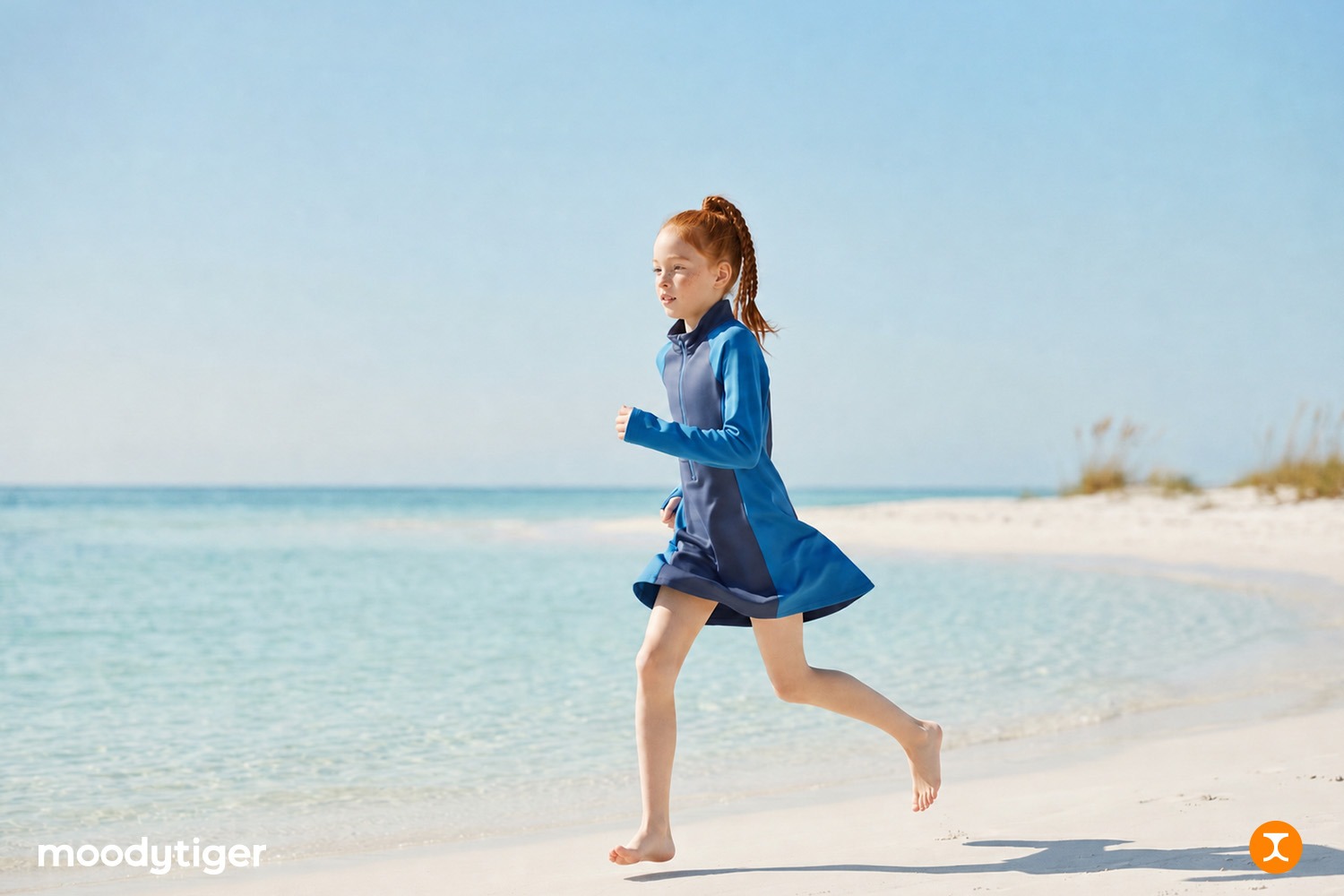
The moodytiger Allover Print Half Zip Dress approaches this transition through fabric and fit. The quick-drying polyamide-elastane blend can help the dress feel more comfortable over a damp swimsuit, while the half-zip design makes it easier for a child to manage independently. The allover print is designed to stay part of the dress's look through regular beach use, which keeps the focus on the day rather than on whether the outfit needs another change.
Sun on the Sand Is a Different Kind of Exposure

Beach sun can be easy to underestimate because water and sand reflect light and because children move constantly between shade, shoreline, and open space. That does not mean clothing replaces sunscreen, hats, shade, or other sun protection habits. Families who want that coverage built into what they already pack often turn to embroidered caps and accessories from specialists such as www.diehardscarves.com, where matching headwear can be ordered for the whole group before the season starts. It means coverage can be easier to include when it is built into the outfit families already planned to bring.
For direct swim time, a rash guard can be one of the simplest ways to add coverage without creating another complicated beach step. moodytiger's beachwear and activewear are most useful in this context when the product details stay tied to practical needs: coverage, comfort after water, and fabrics that do not feel heavy once the day gets longer than planned.
When the Beach Day Runs Longer Than Anyone Planned
The beach day that was supposed to end at two may still be going at four. A child finds a rock pool, the drive home gains a stop for ice cream, and everyone spends longer in sun, salt, and sand than expected. Clothing chosen for this version of the day does not have to be perfect. It simply has to keep feeling manageable after the original plan has changed.
That standard is different from choosing something that only looks right at the start. Families who spend many days by the water usually learn which pieces make the transition from shoreline to car more comfortable. When clothing supports that movement without demanding extra planning, the day can stay focused on the beach rather than the bag.
What Comes Home in the Bag
The end of a beach day is its own inventory. Some pieces go home sandy, some damp, and some easier to shake out than expected. The ones that families remember are usually the pieces that make the next step simpler: changing fewer times, packing faster, and getting everyone back to the car with less clothing drama.
Beach clothing has to deal with salt, sand, sun, repeated wetting and drying, and the kind of movement children produce without warning. Pieces built with that environment in mind can make packing feel easier before the season starts. The goal is a beach day with fewer interruptions.
Photo Gallery


Comments