Blog
The Hidden Cost of Hard Water: Why Your Toilets and Faucets Wear Out Faster Than They Should
The Hidden Cost of Hard Water on Your Home's Plumbing
Hard water is quietly wrecking your toilets and faucets. Learn the real cost, the signs to watch for, and how to fix it for good.
You are probably flushing money down the drain and do
not even realize it. That chalky white ring in your toilet bowl and the weak
spray from your shower head are not just cosmetic annoyances. They are the
visible symptoms of hard water slowly destroying your home's plumbing from the
inside out, forcing you to replace fixtures years before their time.
Here is the deal: if you
live in a region with hard water, your toilets, faucets, and water heater are
fighting a losing battle every single day. This guide shows you exactly how
that battle plays out, what it costs you, and the most effective way to stop
the damage before your wallet feels it.
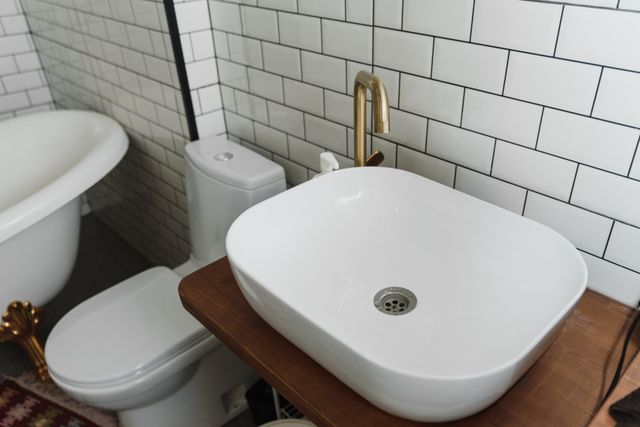
Photo by Arina Krasnikova
What Hard Water Actually Does to Your Fixtures
Hard water is simply water that carries dissolved
calcium and magnesium picked up as it travels through limestone and chalk
deposits underground. The USGS says that more than 85 percent of American homes have
hard water, so the odds are good that yours does too.
When that mineral-rich water heats up or sits still, the
minerals precipitate out of the solution. They form scale, a crusty buildup
that clings to every surface they touch. In your toilet tank, that means a
layer of grit on the flapper and fill valve. In your faucets, it means the
aerator slowly choking shut. On your shower head, it means those little nozzles
calcifying until only a few streams of water push through.
It does not happen
overnight. It is death by a thousand tiny deposits, each one slightly thicker
than the last.
The Toilet Repair Cycle Nobody Warns You About
Walk into any hardware store and you will see entire
aisles dedicated to toilet repair kits. There is a reason for that. The toilet
is ground zero for hard water damage because it cycles water constantly and
leaves it sitting in the tank.
Scale builds up on the flapper, the rubber seal at the
bottom of the tank. Once that coating forms, the flapper cannot seat properly.
Water trickles past it constantly. You hear that faint hissing sound at 2 a.m.
that you have learned to ignore. That hiss is your water bill inflating,
typically by thousands of gallons a year.
The fill valve suffers the same fate. Mineral deposits
gum up the mechanism, so the tank fills slowly or not at all. Before you know
it, you are jiggling the handle or replacing the same internal parts every
eighteen months. A $15 flapper kit becomes a recurring subscription you never
signed up for.
The damage does not stay
hidden inside the tank either. Those rust-colored or white stains in the bowl
are minerals etching the porcelain. Over years, the surface becomes rough, and
stains set in that no brush can remove.
Why Faucets Lose Their Flow
Your faucets tell the hard water story better than any
test kit. Watch what happens when you turn one on. If the stream looks weak,
uneven, or sprays sideways, you have scale buildup in the aerator, that small
mesh screen at the tip.
Aerators are designed to mix air into the water stream.
When calcium deposits clog the mesh, water pressure drops dramatically. Most
people assume they have a plumbing problem and call for help. In reality, the
fix is often just unscrewing the aerator and soaking it in vinegar.
But the aerator is only the
messenger. The real damage happens inside the cartridge, the valve mechanism
that controls hot and cold water. Scale builds up on the ceramic discs and
rubber seals inside. That is why your faucet starts dripping even when it is
off. That is why the handle gets stiff and hard to turn. That is why a $40
faucet needs replacing after just a few years in a hard water home, when the
same faucet would easily last fifteen years with soft water.
The Water Heater: Your Most Expensive Victim
Here is where the real money goes. Your water heater is
essentially a large metal tank that heats water and holds it, which makes it
the single most scale-prone appliance in your house.
As water heats, dissolved minerals solidify and sink to
the bottom of the tank. Over time, that sediment layer grows thick enough to
insulate the water from the heating element. The heater has to work harder and
run longer to deliver the same hot water. The Department of Energy estimates that sediment
buildup can cut a water heater's efficiency by up to 30 percent as it insulates
the burner from the water.
Your energy bills climb. Your hot water supply shrinks.
And eventually, the tank develops hot spots where the metal overheats. That
leads to premature failure, often years before the appliance's expected
lifespan. Replacing a water heater runs anywhere from $800 to over $2,000
installed, depending on the unit. That is a bill you can avoid entirely with
the right prevention.
If you are dealing with an
aging water heater or chronic fixture failures and you want a professional
assessment, calling in plumbers in kona who understand local water
conditions can save you from replacing parts that are only going to fail again.
How to Diagnose Hard Water in Your Home
You do not need a laboratory test to know if hard water
is your problem. Here is a five minute checklist that tells you everything.
●
Run your fingers along the faucet spout. Gritty,
rough texture means scale is forming.
●
Look at your shower glass or tile. White, chalky
spots that resist scrubbing are mineral deposits.
●
Fill a clear glass with tap water. Cloudiness
that clears after a few seconds indicates dissolved minerals.
●
Check your dishware. Spots and film on glasses
fresh from the dishwasher are a classic sign.
●
Lather test: if your soap and shampoo barely
foam no matter how much you use, the minerals are binding with them.
You can also order a mail in
water test kit for a precise measurement of grains per gallon. Anything above 7
grains per gallon is considered hard. Above 10.5 is very hard, and that is
where fixture damage accelerates quickly.
Your Options for Fighting Back
You have essentially three paths forward, and they are
not equal.
Option one: do nothing. This is the most
expensive choice over time. You commit to replacing faucets every few years,
repairing toilet internals constantly, and buying a new water heater a decade
early. The math never works in your favor.
Option two: chemical descaling. You can
periodically soak aerators in vinegar and use chemical descalers to flush your
water heater. This helps, but it is reactive maintenance. You are always
chasing the last buildup, and you cannot descale the inside of your pipes or
the internal cartridge of a faucet. It also does nothing to protect new
fixtures you install.
Option three: install a water softener. This is
the only approach that actually removes the calcium and magnesium before they
enter your plumbing. A whole home softener exchanges those hardness minerals
for sodium ions through a process called ion exchange. Research published in
the peer reviewed journal Nutrients confirms that softening systems effectively
reduce water hardness to negligible levels across the entire household supply.
I will be straight with you:
I would pick option three every single time. A quality softener costs between
$500 and $2,500 installed, depending on the unit and your home's layout.
Compare that to replacing one water heater prematurely and the softener has
already paid for itself. Everything downstream, your toilets, faucets, shower
heads, washing machine, and dishwasher, all start lasting their full expected
lifespan.
A Simple Maintenance Plan for Right Now
Until you decide on a long term solution, here is a
practical routine that keeps the damage manageable.
Once a month, unscrew every faucet aerator and soak them
in white vinegar for an hour. Scrub with an old toothbrush and reinstall. This
takes ten minutes and prevents the worst of the flow loss.
Once a quarter, drain a few gallons from your water
heater tank through the valve at the bottom. This flushes out loose sediment
before it can harden into scale. Check your heater's manual first, but for most
tanks this is a simple, safe procedure.
Once a year, inspect your toilet tank internals. If you
see crusty buildup on the flapper or fill valve, clean it or replace those
parts proactively rather than waiting for the constant running to start.
This routine will not
reverse existing scale or protect you from new buildup, but it stretches the
life of your fixtures while you research the permanent fix.
The Bottom Line on Hard Water Costs
Hard water is not a health hazard and it is not going to
make your pipes burst. It is a slow, quiet financial drain that shortens the
life of nearly everything it touches. The fixtures you expect to last a decade
or more fail in half that time. The water heater that should give you fifteen
years gives you eight. And the repair bills arrive at the worst possible
moments, because plumbing failures always do.
So before you replace that dripping faucet for the
second time, ask yourself a tougher question. Do you have a fixture problem, or
do you have a water problem? Because treating the symptom without fixing the
cause means you will be back in the same spot, reaching for the same wallet, in
another year or two.
Look at the chalky ring in your toilet bowl and decide
which bill you would rather pay: the one time cost of softening your water, or
the endless parade of replacement parts that hard water guarantees. Your
plumbing has already made its choice. The question is whether you are ready to
make yours.
Photo Gallery


Comments