Blog
When to Replace Your Home Air Conditioner Before Summer
7 Warning Signs Your AC Won't Survive Another Florida Summer
Wondering if your air conditioner can handle one more summer? These seven warning signs tell you exactly when to repair and when to replace.
That AC unit has been making a clicking sound when it kicks on, and your last electric bill came in sixty dollars higher than the same month last year. Here is the uncomfortable truth: most homeowners wait until the system dies on the hottest afternoon of July before they think about replacement, and that timing costs them real money. The smart move is deciding now, while you still have options, whether your current unit deserves another summer or needs to retire.
The average air conditioner lasts somewhere between fifteen and twenty years, but age alone is not the whole story. A ten year old unit that got regular maintenance might outlive a six year old unit that never saw a filter change. What matters is how your specific system is behaving right now, and whether the repair bills are starting to look like a down payment on something new.
This guide walks you through
the seven warning signs that point toward replacement, the math you should run
before you commit to another repair, and the simple checklist that settles the
question in about fifteen minutes.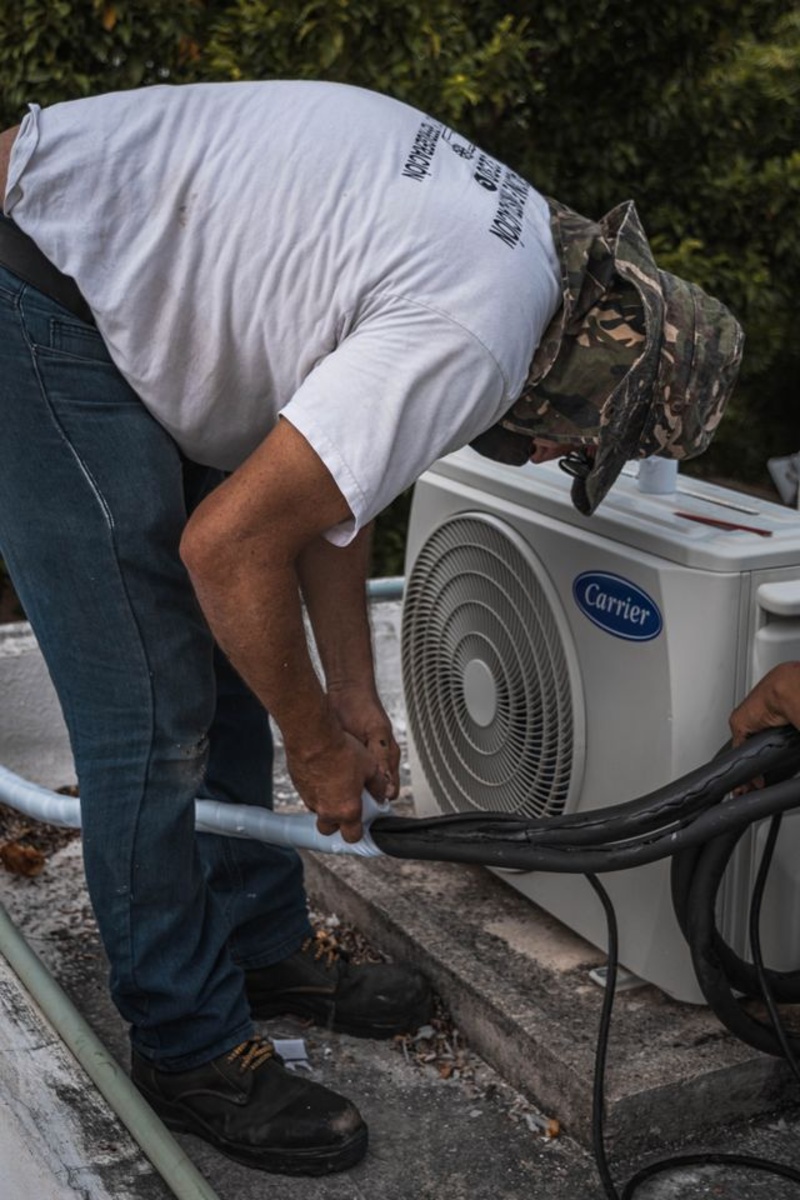
Photo by José Andrés Pacheco Cortes
Why Do AC Units Die Right Before Summer?
Air conditioners fail in late spring for a boring mechanical reason: they have been sitting idle for six months. Seals dry out, capacitors weaken, and refrigerant slowly leaks past aging fittings. The first real heatwave pulls the system into full load, and whatever was marginal in March becomes a breakdown in May.
The Department of Energy notes that regular maintenance can catch most of these issues before they turn into failures, yet a huge share of homeowners skip the tune up entirely. You would not let your car sit all winter and then drive it across the country without checking the fluids. An air conditioner works the same way.
There is also a scheduling
problem. When everyone's system dies at once, every HVAC company in your area
gets flooded with emergency calls. You wait three days for a repair visit. You
pay overtime rates. You get whichever technician happens to be available
instead of the one you know. That is why the question of repair versus
replacement deserves answering in the calm weeks of early spring, not the panic
of the first heat spike.
Sign #1: The Unit Is Past Its Expected Lifespan
Age matters because efficiency standards have changed so much. A system from 2005 might run at a SEER rating of 10, while modern units start around 14 or 15 and go much higher. That difference is not a marketing gimmick. The U.S. Department of Energy reports that upgrading from an older system to a higher efficiency model can cut your cooling costs by twenty to forty percent depending on where you live and how old your current equipment is.
So if your unit is past fifteen years old, you are not just dealing with a machine that might break. You are dealing with a machine that costs you more every single month it keeps running. Every summer you squeeze out of that old system is a summer you pay inflated power bills for outdated technology.
The math gets worse when you
factor in that older systems use R-22 refrigerant, which is being phased out.
Once that refrigerant leaks, the recharge cost alone can run into the hundreds,
and the supply keeps shrinking.
Sign #2: Your Repair Bills Are Adding Up
Sit down and actually write out what you have spent on this system over the past two years. Include the emergency call fee, the capacitor replacement, the refrigerant top off, the blower motor repair. Most homeowners are shocked when they see the real number.
A useful rule of thumb that Consumer Reports has cited in its appliance guidance: if a single repair costs more than half the price of a new unit, replacement makes more sense. Even a cheaper pattern matters. Two or three significant repairs in a single year usually means the system is entering a cycle where something new fails every few months.
Nobody likes writing a big
check for a new air conditioner. But there is a quieter kind of pain in writing
four medium checks across twelve months, knowing the fifth one is already on
its way.
Sign #3: Your Energy Bills Keep Creeping Up
Pull your electric bills from the last three summers and compare the cooling months. If your usage habits have stayed the same but your costs keep climbing, the system is losing efficiency. That happens as coils get dirty, refrigerant levels drop, and the compressor works harder to achieve the same result.
An old, struggling unit can consume a startling amount of extra power. The Environmental Protection Agency's ENERGY STAR program estimates that households waste substantial energy on outdated cooling equipment each year, and a new high efficiency system pays you back in monthly savings that start the day it gets installed.
Here is a concrete way to
think about it. Suppose a new system saves you fifty dollars a month during
cooling season. Over a five month Florida summer, that is two hundred fifty
dollars a year just in avoided waste. The savings stack up fast enough to matter.
Sign #4: The Air Feels Wrong Even When It Runs
Your AC is blowing cold air, so it must be fine, right? Not necessarily. Pay attention to the details.
Rooms at different temperatures. Air that feels cool but humid. A system that runs constantly without ever quite satisfying the thermostat. Strange smells when the unit kicks on. These symptoms point to problems with ductwork, refrigerant levels, or the compressor itself, and some of those fixes are expensive enough that replacement wins the argument.
The humidity point matters
more than most people realize, especially in Florida. An oversized or failing
system removes less moisture from the air, which makes your home feel clammy
even at a reasonable temperature. You end up turning the thermostat down to
compensate, which drives your bill up while your comfort stays flat.
Sign #5: You Hear Noises That Were Not There Before
Air conditioners make noise. You know your unit's normal sounds the way you know your car's normal sounds. When something new shows up, a grinding, a loud bang on startup, a persistent buzzing, that is the system telling you a component is failing.
Some of these sounds come
from cheap fixes. A loose belt or a bad capacitor is no big deal. But grinding
often points to the compressor, which is the heart of the system, and
compressor replacement is usually not worth doing on an older unit. The labor
alone eats most of the value, and you still have an old system wrapped around
that new part.
The 15 Minute Decision Checklist
Grab a notepad and work through these questions. Three
or more "yes" answers and you should seriously start shopping for a
replacement unit.
●
Is the system more than twelve years old?
●
Have you spent more than a thousand dollars on
repairs in the past two years?
●
Did your summer electric bills climb by more
than twenty percent despite no change in your habits?
●
Does the system struggle to hold temperature on
the hottest afternoons?
●
Has a technician mentioned low refrigerant or a
slow leak?
●
Is your home noticeably humid even when the AC
runs constantly?
●
Has the unit needed more than two service calls
in a single year?
If you land in the
replacement zone, do not panic about the process. A quality installation takes
a day or two, and the new system will run quieter, drier, and cheaper than
anything you have experienced in years.
What a Replacement Actually Costs and Saves
Honest numbers help here. A complete system replacement for a typical Florida home usually lands somewhere in the four to six thousand dollar range before any discounts or rebates. That figure varies with your home's size, the efficiency tier you pick, and the complexity of the installation.
Against that cost, stack the savings. Lower monthly bills. Fewer repair visits. Better humidity control. Tax credits and utility rebates for high efficiency equipment can knock another several hundred dollars off the total, depending on your area and the model you choose. Many contractors also offer financing that spreads the cost across manageable monthly payments.
When you start getting
quotes, look for a contractor who does a proper load calculation rather than
guessing at the right size. An oversized unit short cycles and leaves your home
clammy. An undersized unit runs constantly and wears out fast. The right size
comes from math, not from matching whatever was there before.
Plan the Installation Now, Not in July
Here is the part nobody wants to hear: waiting until your system dies means accepting whoever has availability, paying emergency premiums, and living without AC during a Florida summer for however long the install takes. That version of events is miserable.
The smart play is making the call in the off season. Spring installations get scheduled at your convenience. You can compare quotes properly. You can pick the equipment you actually want instead of grabbing whatever the contractor has in stock. And you avoid the stress of watching your family sweat through the hottest week of the year.
If you live in the northeast
Florida area and your checklist suggests replacement is near, talking to a
qualified local contractor now gives you time to plan the work around your
schedule instead of around a breakdown. A straightforward ac installation
ponte vedra project can be booked weeks in advance, which beats the
emergency call on July 4th every single time.
Trust the Signs and Save Yourself the Headache
Your air conditioner is not trying to trick you. The rising bills, the strange noises, the humidity that never quite goes away, these are the system communicating in the only way it can. The question is whether you listen now, while replacement is a choice, or later, when it is a crisis.
Run the checklist this weekend. Look at your repair
history with honest eyes. And remember that a new system is not just a machine
that cools your house. It is a machine that cools your house for less money,
with better comfort, for the next fifteen years.
So what is your AC telling you right now?
Photo Gallery


Comments