Blog
Why Limewash and Microcement Are Becoming Go-To Wall Finishes for Modern Homes
Paint and wallpaper will always have a place in interior design, but more homeowners are beginning to look for wall finishes that bring texture, depth, and a more architectural feel to a room.
At Enjoy The Wall, we have seen a noticeable increase in homeowners asking about limewash, microcement, and concrete-style decorative finishes. These surfaces work particularly well in modern interiors where the walls are expected to contribute to the overall design rather than simply serve as a background.
Loft-inspired spaces, contemporary homes, and high-tech interiors are especially well suited to these finishes. Their subtle texture, natural variation, and seamless appearance can soften minimalist architecture while still preserving a clean, modern aesthetic.
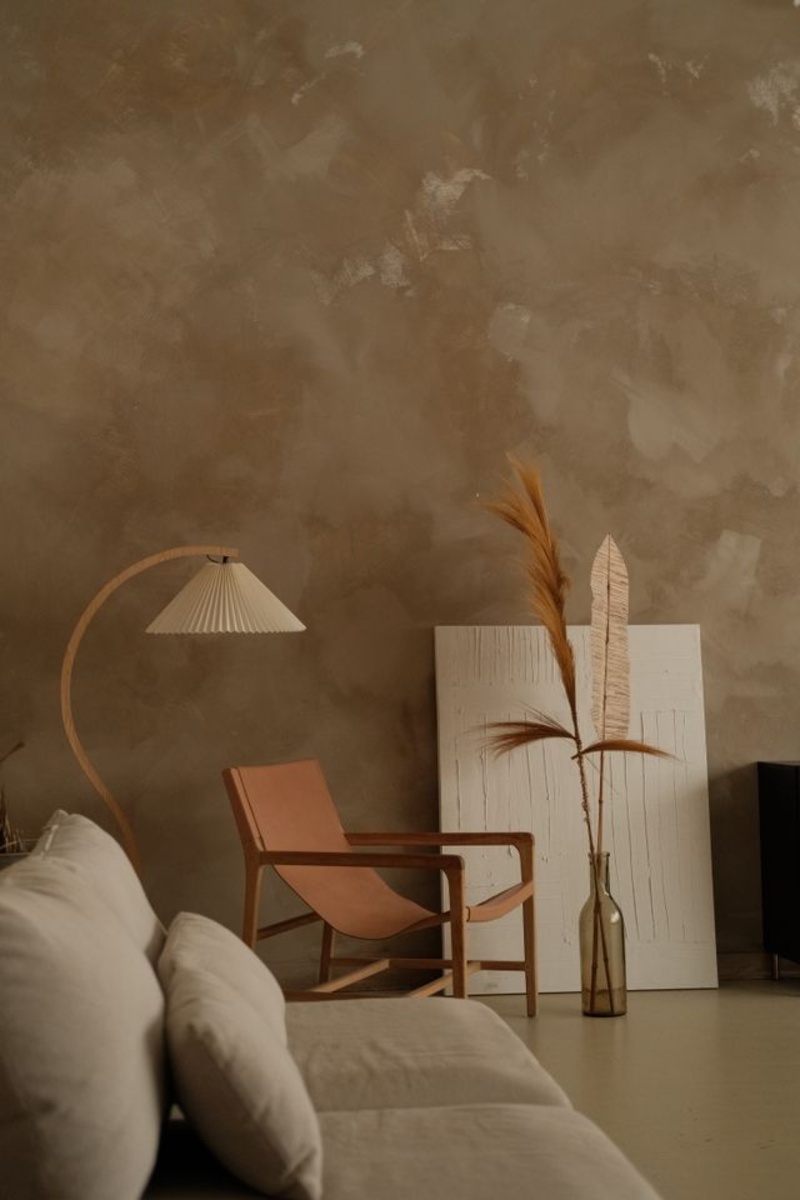
Photo by Pavel Morillo
Where Limewash and Microcement Work Especially Well
Limewash and microcement can be used across an entire room, but some of the most successful applications are concentrated architectural areas.
Fireplaces and fireplace surrounds are among the most common requests we receive. A textured mineral finish can visually connect the fireplace to the surrounding architecture without the joints associated with tile or stone panels.
Home offices have also become an increasingly interesting application.
As more people create dedicated workspaces inside their homes, clients are paying greater attention to what sits behind the desk, shelving, artwork, and video-call background. A softly textured limewash wall or a concrete-inspired finish can add character without making a working environment visually busy.
Other popular applications include:
Fireplace walls and chimney breasts
Home offices
Living-room feature walls
Entry areas
Bedrooms
Powder rooms
Built-in shelving areas
Contemporary kitchens
Architectural niches
The choice between limewash, microcement, concrete plaster, and other decorative finishes depends on the desired texture, substrate, room conditions, and level of durability required.
Why Seamless Surfaces Are So Appealing
One of the major advantages of decorative plaster is continuity.
Wallpaper is installed in individual drops. Tile has grout joints. Panel systems have connections between individual pieces. Decorative plaster, by comparison, can create a visually continuous surface across an entire wall.
This seamless quality is one reason microcement wall finishes in Denver have become particularly appealing for contemporary and loft-style interiors.
Depending on the selected finish and application technique, the surface can range from subtle and almost monochromatic to intentionally irregular, with movement resembling concrete, stone, or naturally aged mineral walls.
There is another advantage that homeowners may not think about when initially selecting a finish: repairability.
A Decorative Wall Can Sometimes Be Repaired Instead of Replaced
No wall finish is indestructible. Electrical work, plumbing changes, new built-ins, remodeling, accidental damage, or future renovations may eventually require opening part of a finished wall.
This is where decorative plaster can have an important practical advantage.
Kris A., co-founder and lead installer at Enjoy The Wall, has repaired decorative finishes several times after other construction work required portions of a wall to be opened.
A recent Denver project is a good example.
The decorative wall had already been completed when it was discovered that electrical wiring that was supposed to run through the wall had not been installed.
With many finished surfaces, that discovery could create a significant problem.
Instead, a controlled section of the decorative finish and substrate was opened. The electrician was able to create the necessary channel, install the missing wiring, and close the wall again.
The decorative finish could then be rebuilt over the repaired area. By reproducing the original application technique, texture, movement, and layering, the plaster installer was able to integrate the repair into the surrounding finish.
This type of repair requires skill, and the exact result depends on the original material and finish, but it demonstrates an important characteristic of many decorative plaster systems: damaged areas can often be worked back into the existing surface rather than requiring replacement of the entire wall.
That repairability is one of the less obvious benefits of professionally applied decorative wall finishes.
Why Wallpaper Repairs Can Be More Complicated
Wallpaper presents a different challenge.
Imagine that electrical work requires one section of a wallpapered wall to be opened. Technically, a damaged strip could be removed and a new strip installed.
The problem is that matching the replacement material is not always as straightforward as it sounds.
Wallpaper manufacturers commonly produce material in batches or dye lots. Even with the same pattern and color specification, there can be subtle variations between production runs.
There is another factor that is particularly relevant in Colorado: sunlight.
Rooms receiving strong Colorado sunlight can experience gradual changes in wallcovering color over time. The difference may be very small and almost impossible to notice during normal use.
But place a brand-new strip of the original wallpaper next to material that has been exposed to sunlight for several years, and the difference may become visible.
For patterned wallpaper, another complication is pattern alignment. A repair needs to account for the original repeat, strip position, trimming, and existing seams.
As a result, replacing only one damaged strip is not always the best solution.
Sometimes Replacing the Wall From Corner to Corner Is Better
When an isolated wallpaper repair would create an obvious color or pattern difference, replacing a larger defined area can often produce a cleaner result.
For example, instead of trying to insert one fresh strip in the middle of an older wallcovering installation, the wallpaper can sometimes be replaced across the entire wall from one inside corner to the next.
Architectural boundaries help hide the transition between old and new material.
Depending on the room, those boundaries may include:
Inside corners
Door openings
Built-in cabinetry
Window walls
Columns
Millwork
Changes in wall plane
At Enjoy The Wall, we evaluate these situations individually because the correct repair strategy depends on the wallpaper, available material, original installation, wall exposure, and room layout.
Sometimes a single strip can be replaced successfully. In other cases, replacing the entire wall section provides a considerably better visual result.
Decorative Finishes Should Be Considered Part of the Architecture
One reason limewash, microcement, and concrete-inspired finishes continue to grow in popularity is that they sit somewhere between decoration and architecture.
They are not simply colors applied to drywall.
Texture, trowel movement, layering, sheen, lighting, and even the direction from which someone enters a room can influence how the finished wall looks.
That makes them particularly effective in restrained contemporary spaces.
A loft with exposed structure and simple furniture may benefit from a concrete-inspired wall that adds movement without introducing another decorative pattern. A high-tech home office can feel warmer with subtle mineral texture behind the desk. A fireplace can become a focal point without requiring stone slabs, tile joints, or elaborate millwork.
Limewash offers a softer effect, with natural tonal movement that works well in bedrooms, living rooms, fireplaces, and relaxed contemporary interiors.
Microcement and concrete-style finishes typically create a stronger architectural statement and pair naturally with wood, glass, black metal, stone, and minimalist furniture.
Good Installation Starts Before the Finish Is Applied
Decorative plaster should not be viewed simply as a final coating.
The condition of the wall underneath it matters.
Cracks, previous coatings, drywall repairs, uneven surfaces, moisture issues, and transitions between different substrates may require specific preparation before the decorative system is installed.
The intended finish also matters. A heavily textured concrete effect can visually tolerate conditions that would be unacceptable beneath a smooth polished finish.
This is why an experienced installer evaluates both the desired appearance and the existing substrate before determining the preparation and application process.
The goal is not simply to make the wall look good on installation day. It is to create a finish that remains practical as the home changes over time.
A Wall Finish Does Not Have to Be Disposable
Home interiors evolve.
A television moves. New lighting is installed. Electrical outlets are added. Built-ins change. A home office is remodeled. Artwork gets relocated.
Those changes are worth considering when selecting a wall finish.
Wallpaper offers enormous design flexibility and access to patterns, murals, grasscloth, textiles, and materials that decorative plaster cannot reproduce.
Limewash and microcement provide something different: texture, continuity, architectural character, and, in many cases, the ability to locally repair or recreate an existing surface.
Neither solution is universally better.
The right choice depends on how the room is used, what visual effect the homeowner wants, and how the surface may need to perform years after the initial installation.
But as homeowners increasingly treat walls as an integral part of interior architecture, it is easy to understand why limewash, microcement, and concrete-inspired finishes are showing up in more fireplaces, offices, living spaces, and contemporary homes.
Photo Gallery


Comments