Blog
How to Store Food When Starting a Small Catering Business

Starting a small catering business can be an exciting opportunity. You get to turn your cooking skills into a real service that brings people together. One of the most important parts of running a successful catering business is learning how to store food in a safe and organized way. Good storage helps you keep ingredients fresh, avoid waste, and stay in line with local health rules. It also makes your day-to-day operations smoother and more professional.
Many new caterers struggle with space. Home kitchens and small commercial spaces do not always offer enough room for large amounts of food. This is where creative storage solutions come in. One of the best options is to use a refrigerated shipping container as your main cold storage. It gives you the space and temperature control needed to run your business with confidence.
In this guide, you will learn the basics of food storage for a new catering business, why refrigerated containers work so well, and how you can set them up to support your growth.
Understanding Your Food Storage Needs
Before you start buying equipment or filling shelves, it is important to understand the types of food you will need to store. Catering businesses often deal with a wide range of ingredients and prepared items. This includes fresh produce, dairy, meats, seafood, sauces, baked goods, and beverages. Some of these foods can sit at room temperature for short periods, while others must be chilled or frozen at all times.
You should also estimate the volume of food you expect to handle each week. Different types of catering services have different storage needs. A business that offers full meals for weddings will need more storage space than a business that prepares snack trays and small bites for office events. Think about how many events you plan to serve, how often you shop for supplies, and how far in advance you prepare your dishes.
Local health departments have rules about storing food at proper temperatures. These rules are in place to keep your customers safe. Make sure you are familiar with the temperature zones for raw meats, produce, and prepared foods. You may also need to follow guidelines for labeling, dating, and food rotation. Understanding these rules now will save you time and prevent mistakes later.
Why a Refrigerated Shipping Container Is Ideal for Caterers
Many small catering businesses look for ways to expand storage without spending too much money. Building a walk-in cooler can be very expensive. Renting a commercial kitchen also adds ongoing costs that may not fit your budget. A refrigerated container is a practical way to solve this problem.
A refrigerated container, often called a reefer, is a large steel container fitted with a heavy-duty cooling system. These containers usually come in 20ft and 40ft lengths. They are built to keep food cold for long periods, even in harsh weather. They also provide consistent temperature control, which is important for keeping ingredients fresh.
There are several reasons why these containers work so well for catering businesses. First, they are cost effective. You get the benefits of a walk-in cooler without paying to construct one. Second, they are flexible. You can place them on your property, at your prep kitchen, or at an event site. If your business grows, you can add another container or upgrade to a larger size. Third, they are secure. A steel container protects your inventory from theft, pests, and weather.
Refrigerated containers are also energy efficient. Many models have modern cooling systems that use less power than older walk-in coolers. If you need extra freezer space, you can adjust the temperature to handle frozen or chilled items. Because of these benefits, more small caterers are choosing containers as their main storage solution.
Setting Up Your Refrigerated Container for Success
Choosing the right container is the first step. A 20ft container is usually enough for small catering businesses that are just getting started. It gives you plenty of space without being overwhelming. A 40ft container is better for businesses that prepare large event orders or need multiple temperature zones.
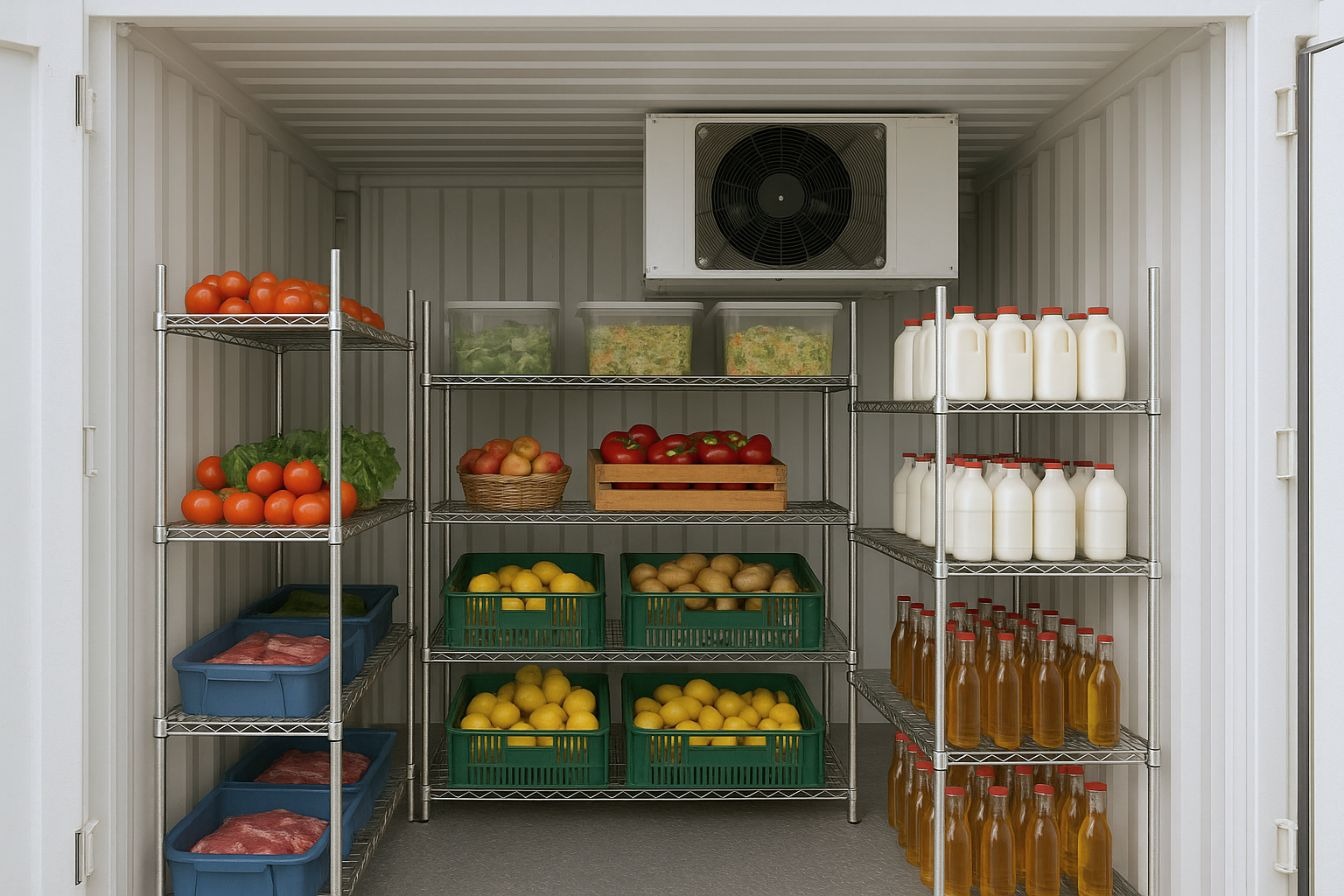
Once you have your container, think about how you will arrange the inside. Good organization helps you work faster and reduce waste. Many businesses install food safe shelving along the walls. This keeps ingredients off the floor and creates clear paths for walking and loading. Pallet racks are also helpful if you order supplies in bulk. Make sure raw meats and seafood are placed lower to prevent drips from contaminating other foods.
Temperature control is another important factor. Set the cooling system to the proper range for the foods you store. You may need one zone for chilled items and another for frozen goods. Some caterers use two containers to keep these areas separate. This prevents confusion and keeps your food at the best quality.
Your container will need a power source. Most refrigerated containers run on standard electrical hookups. If you place the container outdoors, make sure the ground is level and well drained. Avoid areas with standing water or uneven surfaces. You may also want a generator if you plan to bring the container to remote event locations.
Other Storage Tools Your Catering Business Will Need
A refrigerated container handles most of your cold storage needs, but you will still need other tools to keep your kitchen running smoothly. Dry storage is important for spices, canned goods, grains, and baking supplies. These items should be stored in a cool, clean area with low humidity. Use sealed containers and pest control measures to keep your food safe.
Freezer storage is another consideration. You might use freezer space for long-term meat storage or for preparing food in advance. Some caterers use a chest freezer or upright freezer alongside their container. Others add a separate container for frozen goods as the business grows.
It is also helpful to have a labeling system. Simple labels with dates and descriptions make it easy to follow the first in, first out method. This method ensures you use older ingredients first so you do not waste food. Color coded bins and cutting boards help prevent cross contamination. For example, you can assign one color for raw meat and another for vegetables.
Best Practices for Safe and Organized Food Storage
Good storage habits will help your business run smoothly. Start by labeling every item with the date you received it. Keep raw and cooked foods separate at all times. Use the bottom shelves for raw meat and the top shelves for ready to eat items. Clean your storage areas regularly. A weekly cleaning schedule helps keep dirt and bacteria under control.
You should also track temperatures inside your refrigerated container. Most containers have built-in thermostats, but it is smart to check them manually as well. Keeping a temperature log helps you stay compliant with health department rules. It also protects your business from problems caused by equipment failures.
If you ever need more space, you can expand your storage without changing your entire setup. Many companies offer a reefer container for sale if you choose to add a second unit. Expanding your storage this way helps you keep up with growth while keeping costs down.
Planning Your Storage Budget
Budgeting is a key part of starting a catering business. You want to invest in storage solutions that give you the most value. A refrigerated container is more affordable than building a walk-in cooler. Renting is an option if you want to keep upfront costs low. Buying the container gives you a long-term asset that you can use anywhere.
Think about your future needs as well. As your business grows, you may need more freezer space, more dry storage, or an additional container. Planning ahead will help you avoid unexpected expenses.
A Modern Solution
Food storage is one of the most important parts of running a small catering business. When you have the right tools, you can keep ingredients fresh, stay organized, protect your customers, and save money.
A refrigerated container gives you the flexibility and reliability you need when you are starting out. With good organization and smart planning, your catering business can grow with confidence and serve customers with the highest level of quality.
Photo Gallery


Comments